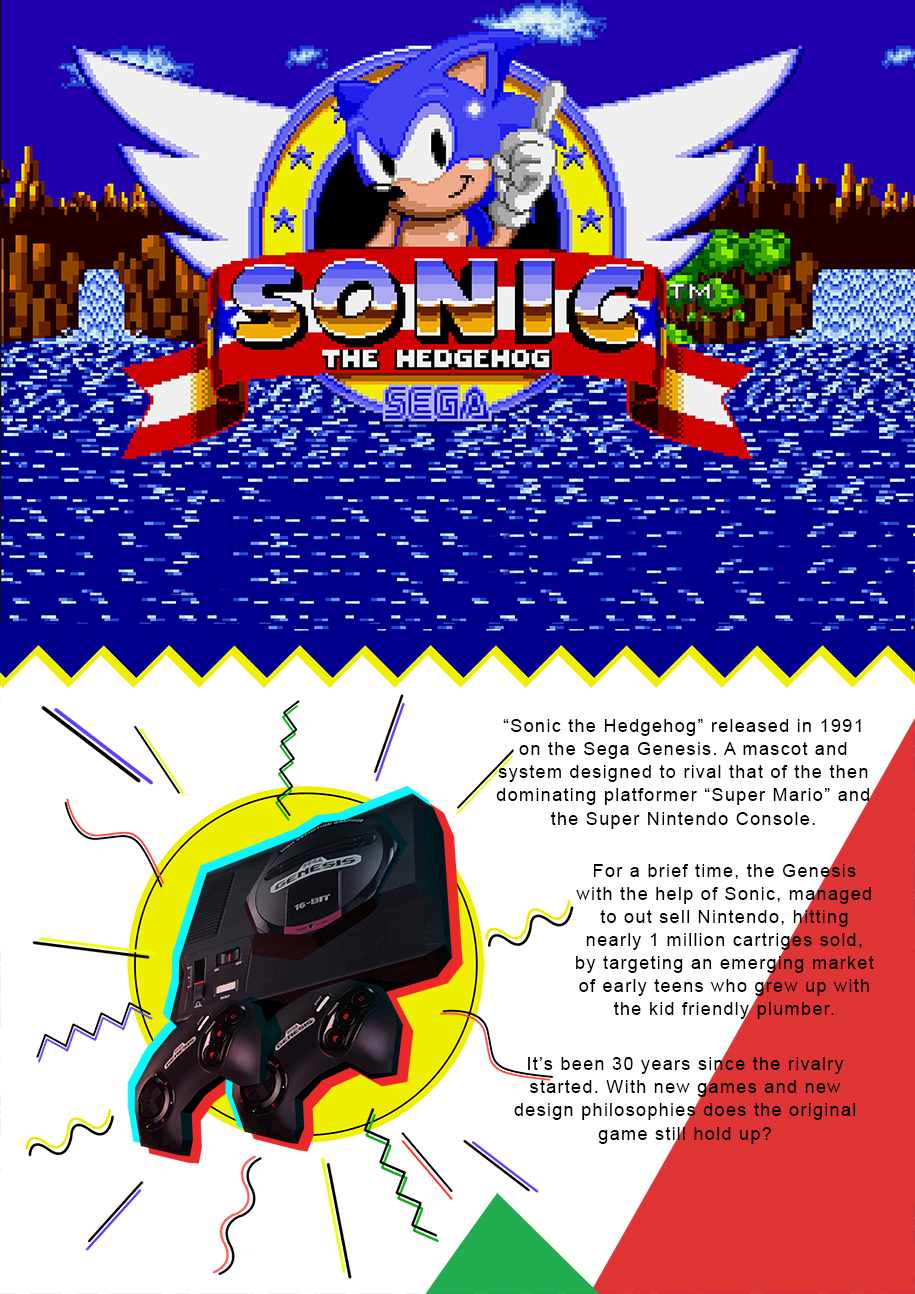
Sonic the Hedgehog released in 1991 on the Sega Genesis. A mascot and system designed to rival that of the then dominating platformer “Super Mario” and the Super Nintendo Console. For a brief time, the Genesis with the help of Sonic, managed to out sell Nintendo, hitting nearly 1 million cartridge’s sold, by targeting an emerging market of early teens who grew up with the kid friendly plumber. Its been over 30 years since the rivalry started. With new games and new design philosophies, does the original game still hold up?
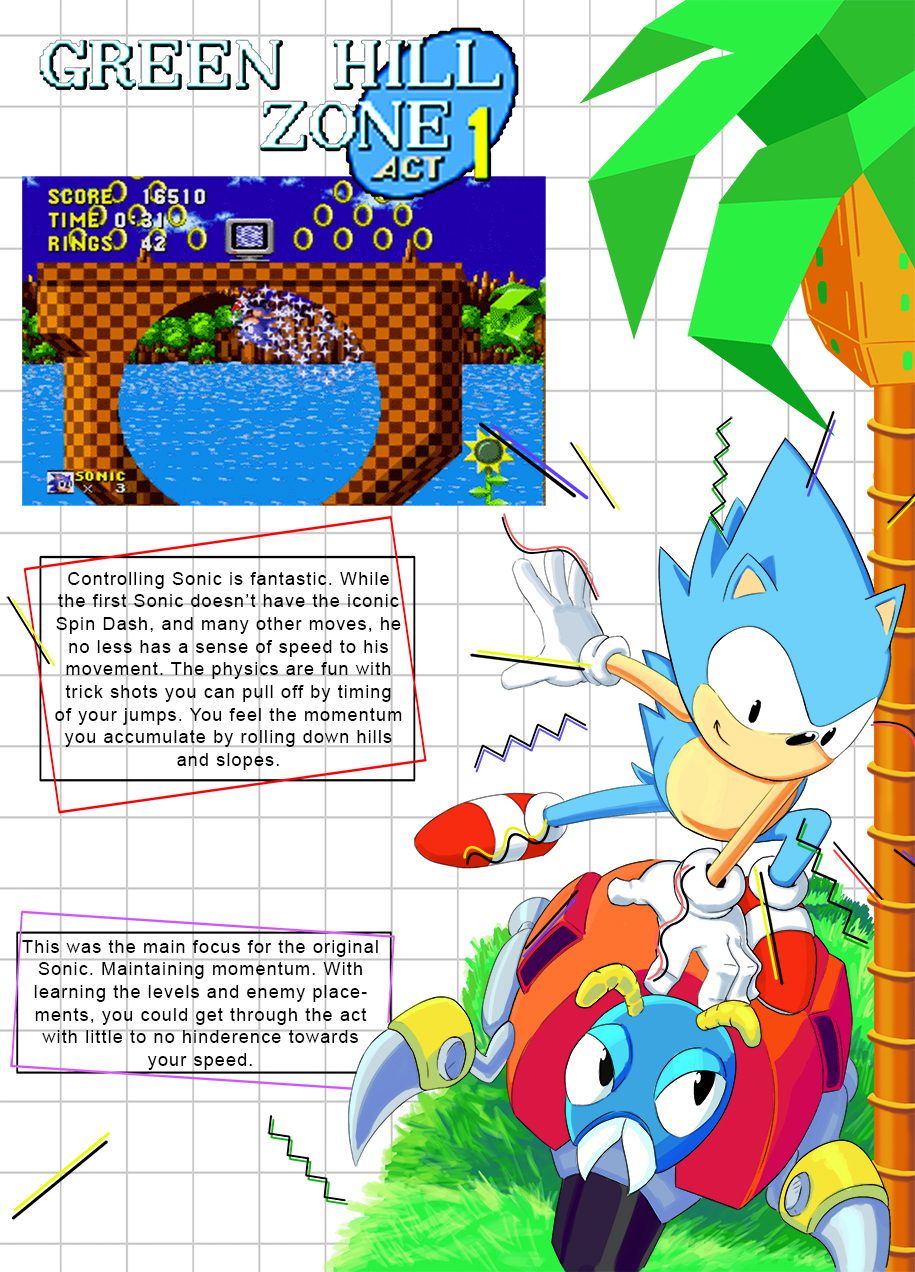
Controlling Sonic is fantastic. While the first Sonic doesn’t have the iconic Spin Dash, and many other moves, he no less has a sense of speed to his movement. The physics are fun with trick shots you can pull off by the timing of your jumps. You feel the momentum you accumulate by rolling down hills and slopes. This was the main focus for the original Sonic. Maintaining momentum. With learning the levels and enemy placements, you could get through the act with little to no hindrance towards your speed.
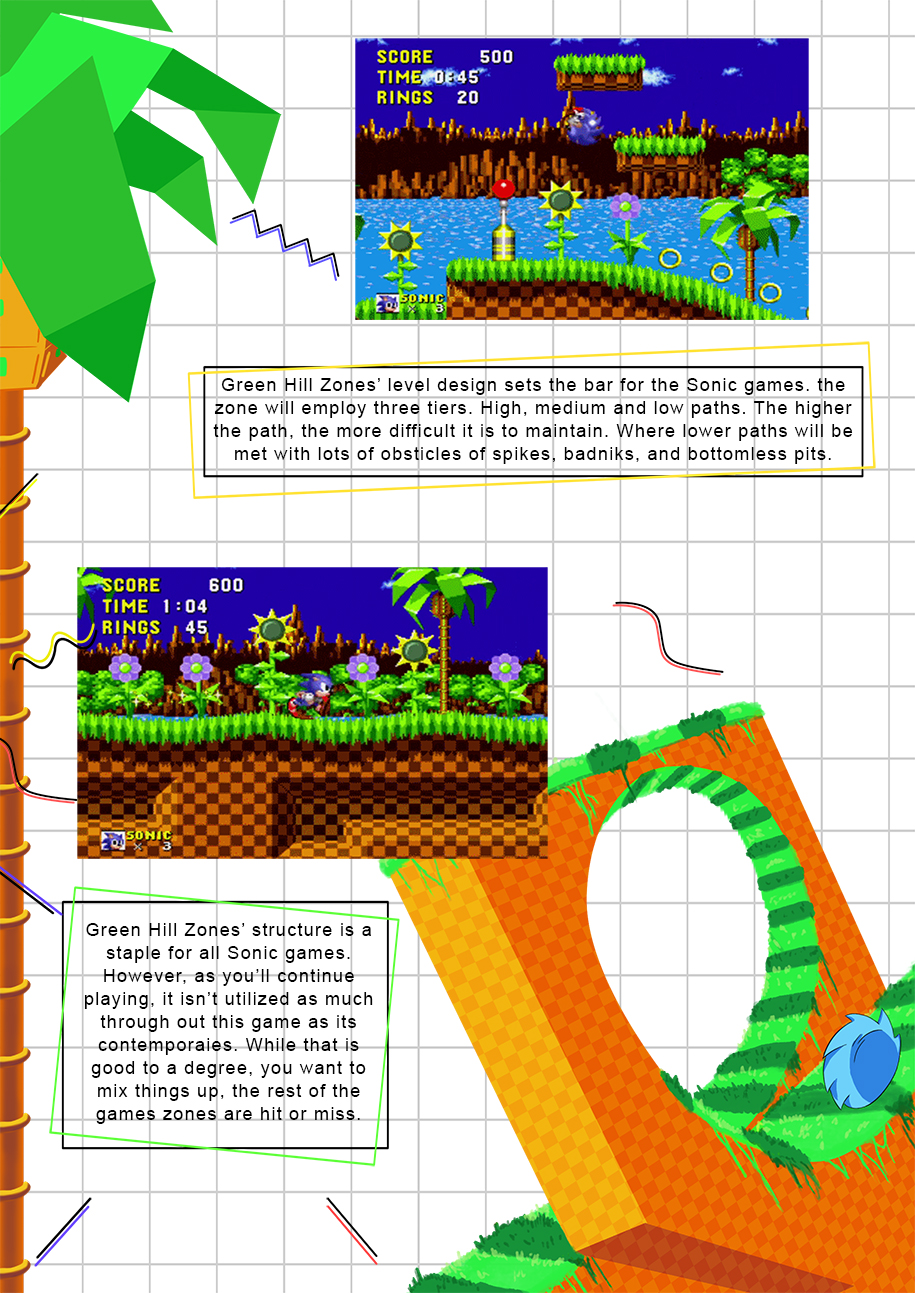
Green Hill Zones Level design sets the bar for the Sonic games. The zone will employ three tiers. High, medium and low paths. The higher the path, the more difficult it is to maintain. Where lower paths will be met with lots of obstacles of spikes, badniks, and bottomless pits. Green Hill Zones structure is a staple for all Sonic games. However, as you’ll continue playing, it isn’t utilized as much throughout this game as its contemporaries. While that is good to a degree, you want to mix things up, the rest of the games zones are hit or miss.
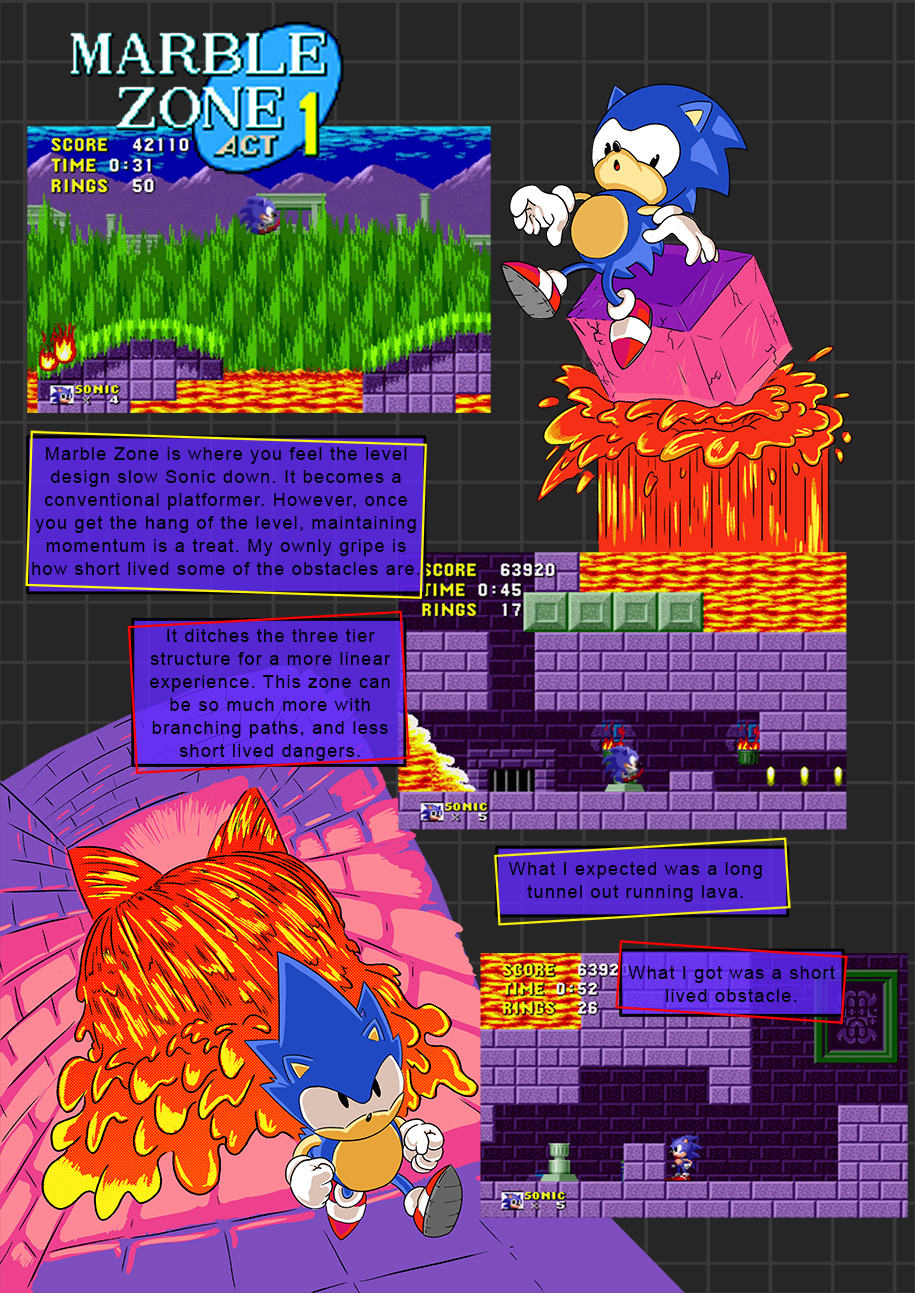
Marble Zone is where you feel the level design slow Sonic down. It becomes a conventional platformer. However, once you get the hang of the level, maintaining momentum is a treat. My only gripe is how short lived some of the obstacles are. It ditches the three tier structure for a more linear experience. This zone can be so much more with branching paths, and less short lived dangers. What I expected was a long tunnel out running lava. What I got was a short lived obstacle.
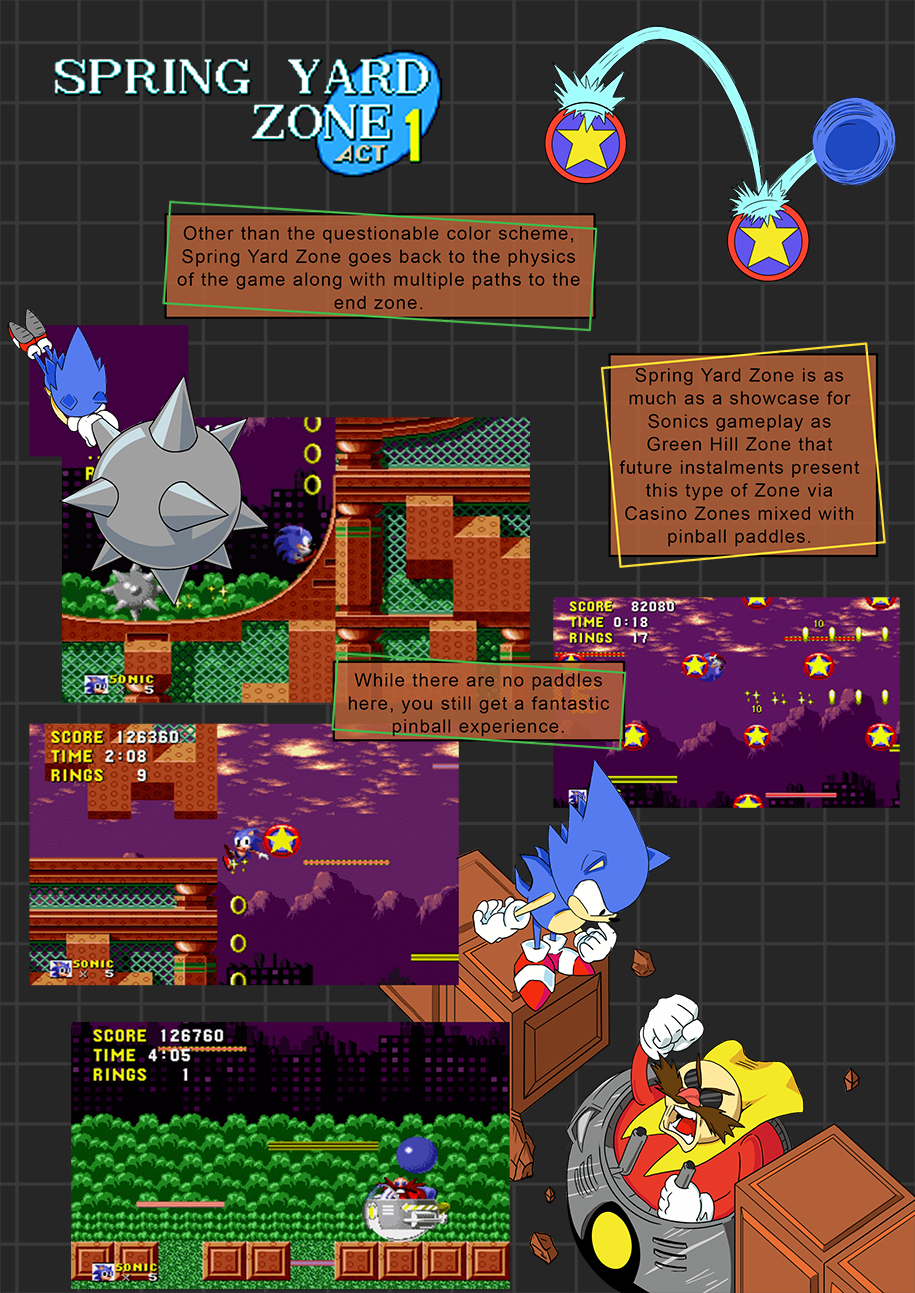
Spring Yard Zone. Other than the questionable color scheme(Burgundy brown, barf green and purple?) Spring Yard Zone goes back to the physics of the game along with multiple paths to the end zone. Spring Yard Zone is as much as a showcase for Sonics gameplay as Green Hill Zone that future instalments present this type of Zone via Casino Zones mixed with pinball paddles. While there are no paddles here, you’ll still get a fantastic pinball experience.
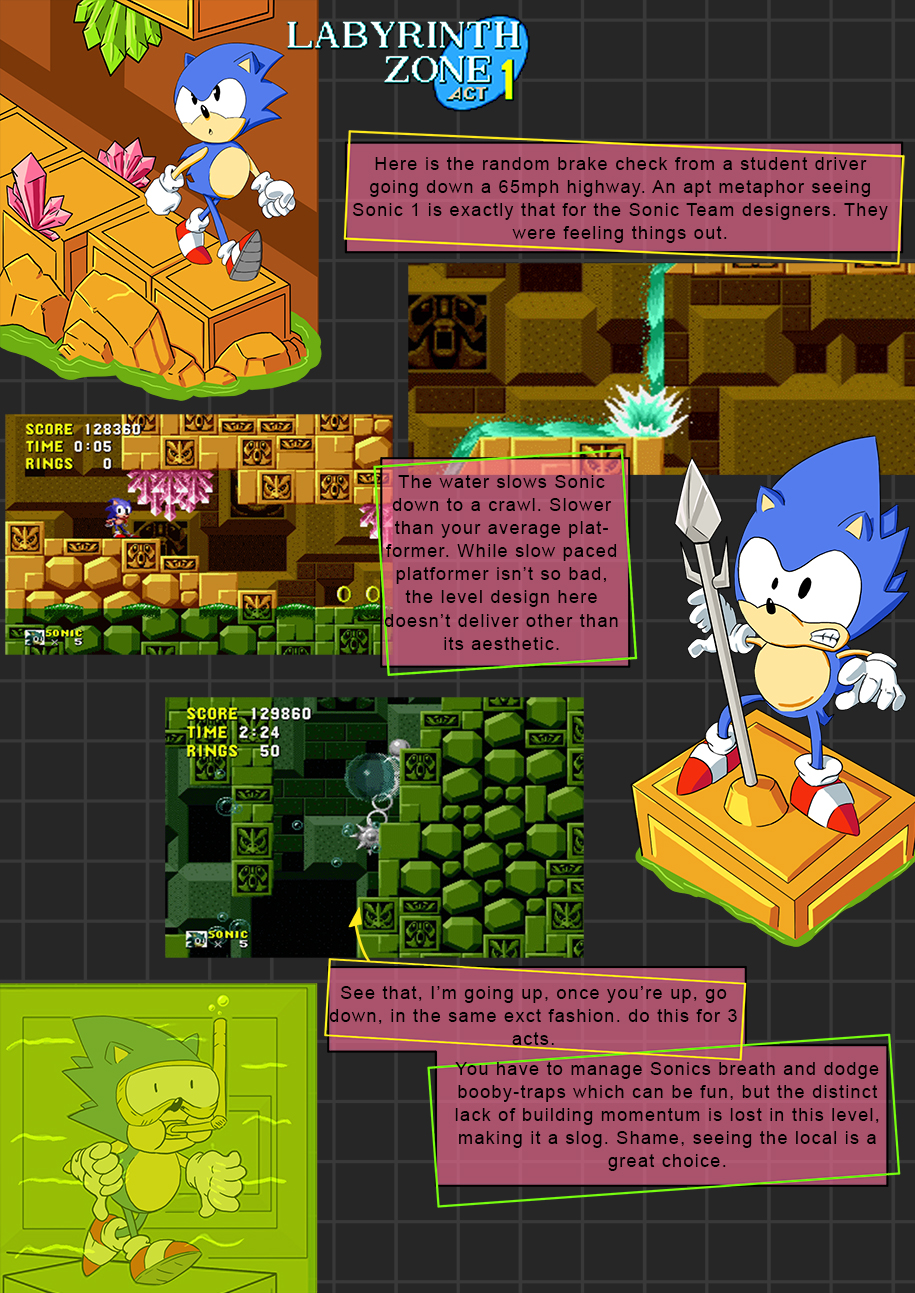
Here is the random brake check from a student driver going down a 65mph highway. An apt metaphor seeing Sonic 1 is exactly that for the Sonic Team designers. They were feeling things out. The water slows Sonic down to a crawl. Slower than your average platformer. While slow paced platformer isn’t so bad, the level design here doesn’t deliver other than its aesthetic. See that, I’m going up, once you’re up, go down, in the same exact fashion. do this for 3 acts. You have to manage Sonics breath and dodge booby-traps which can be fun, but the distinct lack of building momentum is lost in this level, making it a slog. Shame, seeing the local is a great choice.
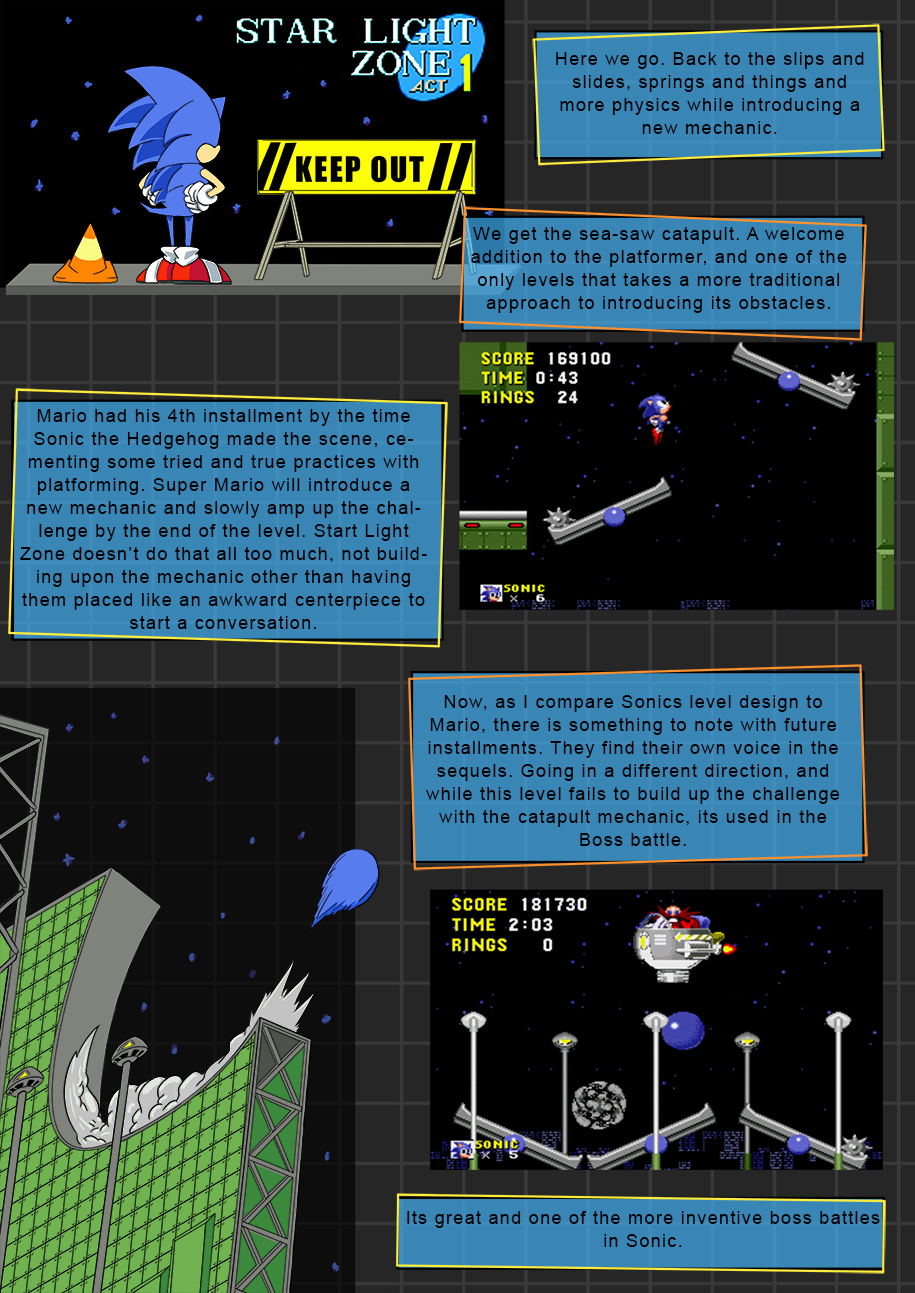
Star Light Zone. Here we go. Back to the slips and slides, springs and things and more physics while introducing a new mechanic. We get the sea-saw catapult. A welcome addition to the platformer, and one of the only levels that takes a more traditional approach to introducing its obstacles. Mario had his 4th installment by the time Sonic the Hedgehog made the scene, cementing some tried and true practices with platforming. Super Mario will introduce a new mechanic and slowly amp up the challenge by the end of the level. Start Light Zone doesn’t do that all too much, not building upon the mechanic other than having them placed like an awkward centerpiece to start a conversation. Now, as I compare Sonics level design to Mario, there is something to note with future installments. They find their own voice in the sequels. Going in a different direction, and while this level fails to build up the challenge with the catapult mechanic, its used in the Boss battle. Its great and one of the more inventive boss battles in Sonic.
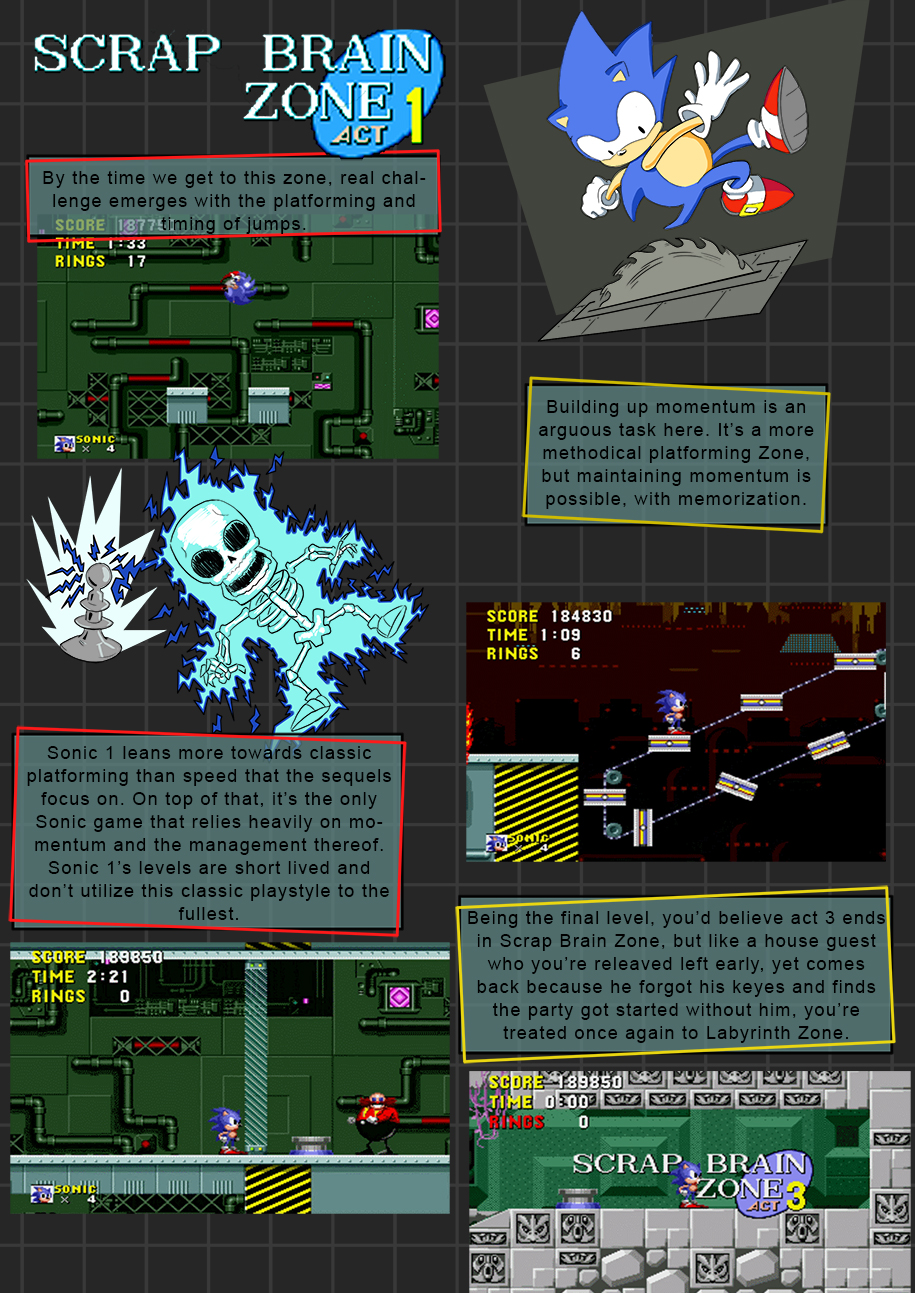
By the time we get to Scrap Brain Zone, real challenge emerges with the platforming and timing of jumps. Building up momentum is an arduous task here. It’s a more methodical platforming Zone, but maintaining momentum is possible, with memorization. Sonic 1 leans more towards classic platforming than speed that the sequels focus on. On top of that, it’s the only Sonic game that relies heavily on momentum and the management thereof. Sonic 1’s levels are short lived and don’t utilize this classic playstyle to the fullest. Being the final level, you’d believe act 3 ends in Scrap Brain Zone, but like a house guest who you’re relieved left early, yet comes back because he forgot his keys and finds the party got started without him, you’re treated once again to Labyrinth Zone.
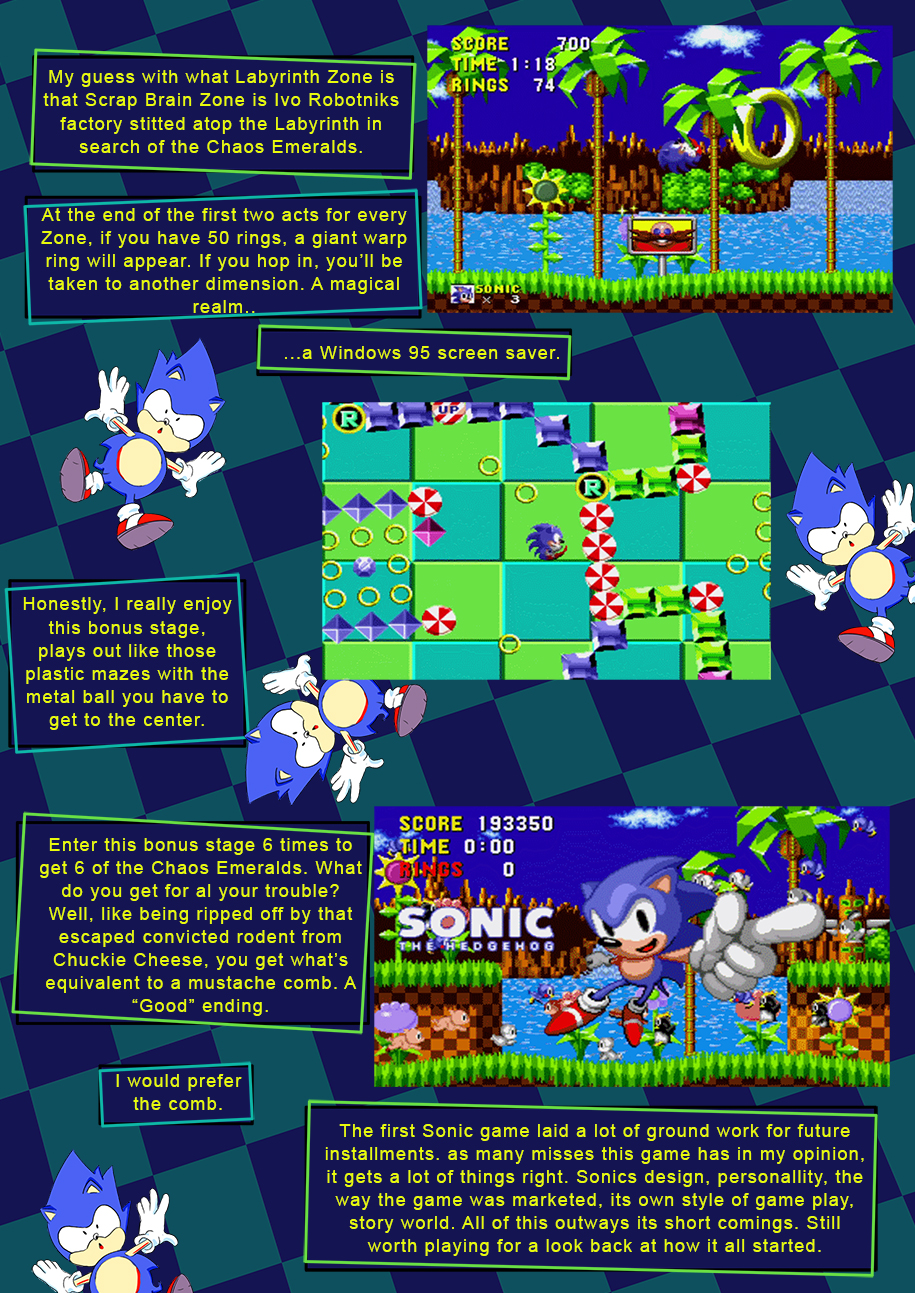
My guess with what Labyrinth Zone is that Scrap Brain Zone is Ivo Robotniks factory settled atop the Labyrinth in search of the Chaos Emeralds. At the end of the first two acts for every Zone, if you have 50 rings, a giant warp ring will appear. If you hop in, you’ll be taken to another dimension. A magical realm…A Windows 95 screen saver. Honestly, I really enjoy this bonus stage, plays out like those plastic mazes with the metal ball you have to get to the center. Enter this bonus stage 6 times to get 6 of the Chaos Emeralds. What do you get for al your trouble? Well, like being ripped off by that escaped convicted rodent from Chuckie Cheese, you get what’s equivalent to a mustache comb. A “Good” ending. Id prefer the comb. The first Sonic game laid a lot of ground work for future installments. as many misses this game has in my opinion, it gets a lot of things right. Sonics design, personality, the way the game was marketed, its own style of game play, story world. All of this outweighs its short comings. Still worth playing for a look back at how it all started.
Thanks for reading and putting up with my spelling/grammar errors. Making the images in photoshop makes it hard to spot my typos. Until next time.